I have mentally and emotionally decided I am running a marathon a year from now. My brain and spirit are ready, but my body is weak. So, I need to train. Reddit has an endless supply of "Couch to Marathon" training plans, and the App Store has an even more endless supply of vibe-coded apps that could help me pursue my goal. But those training plans don't know about my knee injuries or my weird running gait; those vibe coded apps don't know that I am incredibly particular about the sound of the beeps telling me when to switch exercises (I've canceled subscriptions for less.)
Five years ago, this would have either stopped me from training or forced the square peg that I am into a round hole. But today I was able to:
- Walk ChatGPT through my goals and concerns, while giving it access to my Apple Health data so it had a baseline
- Ask it to compile decades of research on strength and conditioning and how to safely go from zero to 26.2
- Build a completely personalized training plan with as much as or as little detail as I needed
Even two years ago, that's where I would have stopped. I would have saved that plan as a PDF on my phone and looked at it while using some app that bugs me just a little. Then slowly but surely the small things that bug me just a little would bug me a lot. Next thing you know I'd be skipping days, then a week, and then i'm right back to zero.
But today, I was able to keep going:
- Give that training plan to Claude and tell it what bothered me about other running apps -- and what I liked about them
- Ask it to build a web app tailored to me and what I needed -- and, more importantly, designed to avoid the things I didn't want
- Ship it to Vercel on a free-tier plan so I could access it whenever, with the minimal log data stored in Vercel's native object storage.
I did all of this, from ideating to shipping, in about an hour.
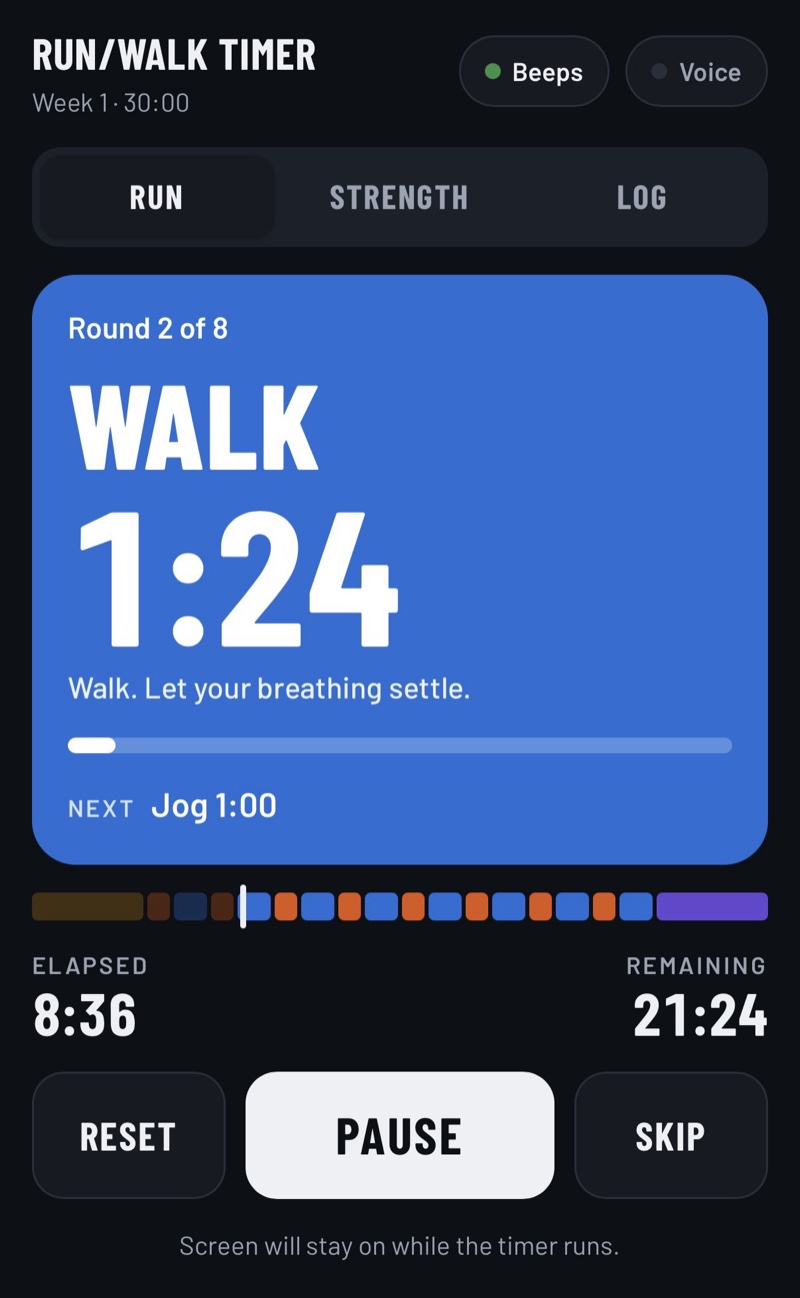
Are there bugs? Sure, but this app is for me.
Could I improve the UI/UX? Most definitely, but this app is for me.
Would people be willing to pay for this? Maybe, but this app is for me.
So B2B SaaS isn't dead; B2C SaaS isn't dead. But there's an entire category of software businesses about to discover that their biggest competitive advantage was simply that their customers didn't know that they could do it themselves.
The post–Industrial Revolution model for products is based on a simple idea: it's cheaper to mass produce the same thing and convince people that's what they need than it is to make bespoke products tailored to individuals. That's as true of fashion as it is of software. If you want proof, just try to find anyone who enjoys using Salesforce and then look at its market cap.
LLMs and agents have changed that. They've given people a sewing machine that takes instructions in plain English, so they can make clothes that actually fit instead of settling for one-size-fits-all pants from Shein. The thing is, sewing has gotten a whole lot easier. Most people just don't know it yet.